

Short answer
Take the tank lid off and look at the water level. If water is spilling into the overflow tube, lower the float. If the level is fine but the toilet still refills on its own, the flapper is letting water leak into the bowl; press on it to confirm, then replace it. A fill valve that hisses or won't shut off needs replacing, and a chain that's too tight or tangled can hold the flapper open.
How a toilet tank works
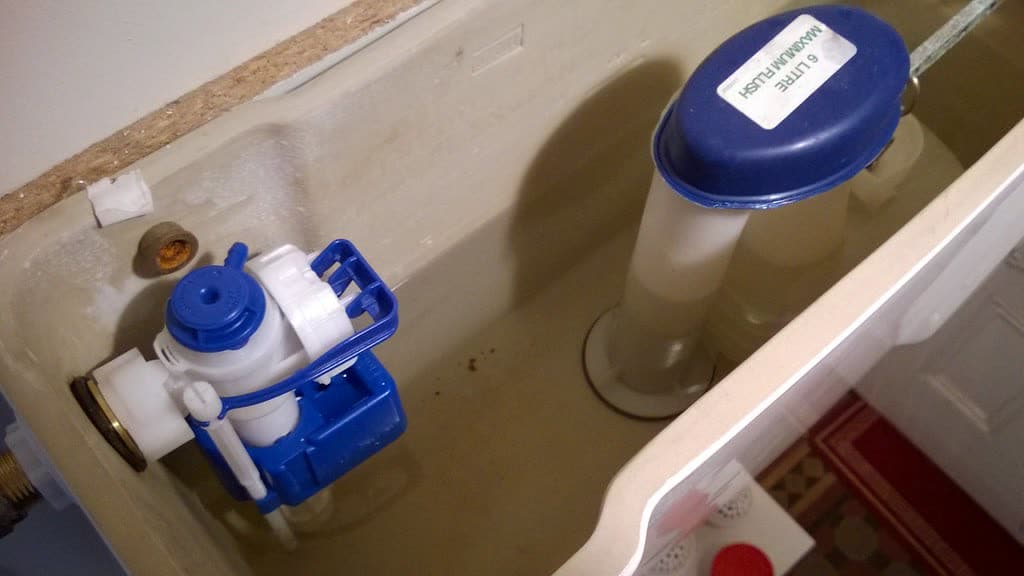
When you flush, the handle lifts a chain, the chain lifts the flapper, and water rushes from the tank into the bowl. The flapper drops back onto the flush valve seat and seals it. The fill valve then refills the tank until the float rises and shuts it off. The overflow tube is a safety drain: if the fill valve doesn't stop, water spills down the tube into the bowl instead of onto the floor.
A toilet runs when water keeps leaving the tank (past the flapper or down the overflow) or the fill valve never fully shuts off.
How much water it wastes
More than most people expect. The EPA's WaterSense program says an old or worn flapper can cause a toilet to flush on its own or silently leak thousands of gallons a year, and that the average household's leaks can account for more than 9,300 gallons of water wasted every year (EPA WaterSense). A loud, constantly running toilet wastes far more than a silent seep.
Likely causes, most common first
- A worn or warped flapper. Rubber hardens, warps and collects mineral deposits, so it no longer seals. The tank slowly drains into the bowl, and the fill valve kicks on every so often to top it up. This is the classic "toilet runs by itself every few minutes."
- The water level set too high. Water rises above the top of the overflow tube and trickles down it constantly.
- A chain problem. Too short, it holds the flapper slightly open. Too long, it can get trapped under the flapper.
- A failing fill valve. It hisses, won't shut off fully, or shuts off slowly.
- A worn flush valve seat or cracked overflow tube. Less common. A rough seat won't let even a new flapper seal, and a crack in the overflow tube below the water line drains the tank continuously.
Step by step diagnosis
1. Look at the water level
Take the lid off and set it somewhere safe; tank lids crack easily. After the tank has refilled, the water should stop about an inch below the top of the overflow tube. Most tanks have a fill line marked inside.
- Water pouring into the overflow tube: the float is set too high, or the fill valve isn't shutting off. Go to step 3.
- Level is normal: go to step 2.
2. Test the flapper
Do the dye test: add a few drops of food coloring to the tank and don't flush. WaterSense says if color shows up in the bowl after 10 minutes, you have a leak. You can also press down firmly on the flapper with a stick or gloved hand while the toilet is running. If the running stops, the flapper isn't sealing.
3. Check the chain
With the flapper closed, the chain should have a little slack, roughly a half inch or so. It shouldn't be tight, and it shouldn't be long enough to fall under the flapper.
4. Listen to the fill valve
A fill valve that keeps hissing after the tank is full, or cycles on and off, needs adjusting or replacing.
How to fix each one
Adjust the float
- Float cup on the fill valve shaft (most modern toilets): turn the adjustment screw on top of the valve, or squeeze the metal clip and slide the cup down.
- Ball on an arm (older toilets): turn the adjustment screw where the arm meets the valve, or gently bend a metal arm down slightly.
Flush and check the level again. Aim for about an inch below the overflow tube.
Replace the flapper
- Turn off the supply valve behind the toilet (clockwise) and flush to empty the tank. See how to shut off your water if the valve is stuck.
- Unhook the chain from the handle arm and slide the old flapper's ears off the pegs on the overflow tube.
- Take the old flapper to the store, or note the toilet brand and model from inside the tank. Flappers come in different sizes (2 inch and 3 inch are common) and styles.
- Wipe the flush valve seat with a cloth or a fine scrubbing pad to remove mineral buildup.
- Fit the new flapper, hook up the chain with a little slack, turn the water back on, and test.
Replace the fill valve
Universal fill valve kits are designed for homeowners and include instructions. The basics: shut off the supply, flush, sponge out the remaining water, disconnect the supply line under the tank, unscrew the locknut and lift out the old valve. Set the new valve's height to suit your overflow tube, tighten the locknut hand-tight plus a little, reconnect the supply, and clip the refill tube onto the overflow tube. Keep a towel under the tank while you work.
What not to do
- Don't overtighten the fill valve locknut or supply line nut on a porcelain tank. It can crack.
- Don't bend the float arm on a plastic assembly. Use the adjustment screw.
- Don't just jiggle the handle for months. The leak is costing water around the clock.
- Don't buy a flapper by guesswork. A mismatched flapper often leaks from day one.
- Don't use drop-in cleaning tablets if your toilet's manufacturer advises against them; some can wear rubber parts faster.
DIY vs calling a licensed plumber
Flappers, chains, float adjustments and fill valves are genuinely DIY-friendly. Consider a licensed plumber when:
- The supply shutoff valve won't close or leaks when you turn it
- A new flapper still leaks, which can mean a damaged flush valve seat
- The overflow tube or tank is cracked
- The toilet also leaks at the base or onto the floor (see leaking toilet)
- You'd simply rather not
See toilet repair for when a repair makes sense and when replacing the toilet is the better deal, and choosing a plumber for checking a Texas license.
What to tell the plumber
- Whether it runs constantly or refills every few minutes
- Your dye test result
- What you've already replaced
- The toilet's brand and age, if you know it
Prevention
- Dye test every toilet once or twice a year.
- Replace flappers at the first sign of running, and wipe the seat clean when you do.
- Check that the supply shutoff turns freely now and then, so it works when you need it.
- Watch your water bill: an unexplained rise is often a toilet. Our high water bill checklist walks through a full meter test.
Frequently asked questions
Why does my toilet run for a few seconds every so often?
That's a slow leak from the tank into the bowl, usually through a worn flapper. When the tank level drops, the fill valve briefly tops it up. Replacing the flapper normally stops it.
How much water does a running toilet waste?
It depends on the leak. EPA WaterSense says a worn flapper can silently leak thousands of gallons a year, and a toilet that runs loudly all the time wastes more than a slow seep.
How do I know if the flapper or the fill valve is the problem?
If water is spilling into the overflow tube, it's the float setting or the fill valve. If the level is correct but the toilet refills on its own, or dye in the tank shows up in the bowl, it's the flapper.
Can I replace a toilet flapper myself?
Yes. Shut off the supply valve, flush to drain the tank, unhook the old flapper and chain, and fit a matching replacement. Take the old one to the store so you get the right size and style.
Is a running toilet an emergency?
Usually not. It wastes water but doesn't cause damage by itself. If water is overflowing onto the floor, turn off the supply valve behind the toilet and deal with it right away.