
Short answer
If only one faucet or shower is weak, clean its aerator or showerhead, which is often clogged with mineral scale. If only the hot water is weak, look at the water heater. If the whole house is weak, check that the main shutoff is fully open, look for a failing pressure-reducing valve, run a leak test at the meter, and check whether neighbors are affected.
Step 1: work out how widespread it is
Check a few fixtures, hot and cold, upstairs and down:
- One fixture only: the problem is at that fixture. Go to step 2.
- Hot water only, everywhere: the problem is at or near the water heater. Go to step 3.
- Whole house, hot and cold: the problem is in the supply to the house. Go to step 4.
- Came on suddenly across the neighborhood: possibly a City main issue or work nearby. Go to step 5.
Step 2: one faucet or shower
Clean the aerator
The aerator is the small screen screwed into the end of a faucet spout. Mineral scale and debris collect there.
- Unscrew it by hand, or with pliers wrapped in tape.
- Rinse out loose debris.
- Soak it in white vinegar for an hour or so to dissolve scale. Scrub with an old toothbrush.
- Reassemble in the same order.
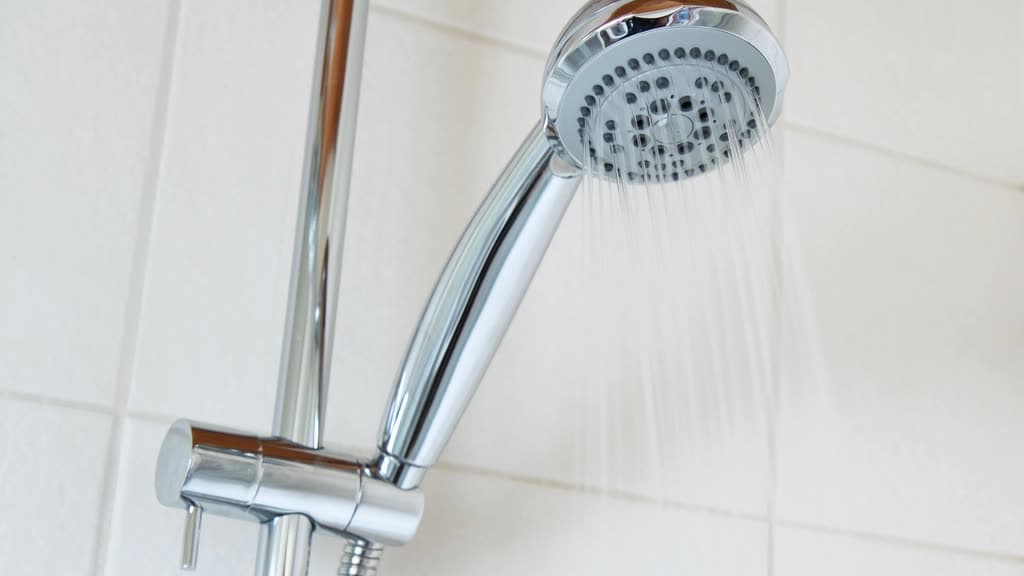
Clean the showerhead
Remove it, or tie a bag of vinegar around it overnight, then scrub the nozzles. Some showerheads also have a small flow restrictor or screen at the inlet that clogs.
Check the fixture's shutoff valves
The small valves under the sink or behind the toilet can be partly closed after a repair. Make sure they're fully open.
Faucet cartridge
If the aerator is clean and the faucet is still weak, the cartridge inside may be clogged or failing. Worth a look for handy homeowners, otherwise see faucet repair.
Single-handle shower is weak on both hot and cold
The pressure-balancing valve behind the handle can clog with debris or scale. This usually needs a plumber or a careful DIY cartridge swap.
Step 3: hot water only
- Check the water heater's cold inlet valve is fully open.
- Sediment in the tank or at the hot outlet can restrict flow. See water heater not heating for sediment signs.
- Scale in hot water lines is more common than in cold, because heat drives minerals out of solution.
- A failing water heater can shed debris into the lines.
Step 4: whole house
Is the main shutoff fully open?
After any plumbing work, the main valve may have been left partly closed. Open it fully. On a gate valve (round handle), turn counter-clockwise until it stops, then back a quarter turn. See how to shut off your water for where to find it.
Pressure-reducing valve (PRV)
Many homes have a PRV, a bell-shaped brass valve on the main line after the shutoff, which lowers the incoming City pressure to a safe level for the house. When a PRV fails, pressure can drop too low (or rise too high). They wear out over time. Adjusting or replacing one is usually a job for a plumber.
Test your pressure
A pressure gauge that screws onto an outside hose bib is inexpensive at hardware stores. Turn off all water, attach it, open the bib, and read it. Many homes aim for somewhere around 40 to 60 psi, though a plumber can tell you what suits your system. A very low reading points to the PRV, the service line, or a supply issue. A very high reading is also a problem, since it stresses pipes, fixtures and the water heater.
Check for a leak
A leak in the supply line lets water escape before it reaches your faucets.
- Turn off all water use, including the irrigation system.
- Look at the leak indicator on the City water meter (a small spinning triangle or dial).
- If it moves, water is going somewhere. See our slab leak signs guide for how to narrow it down.
Old galvanized pipes
Galvanized steel pipes corrode on the inside over decades, narrowing the opening. Most McKinney homes were built after 1990 and won't have them, but some older homes near downtown might. A plumber can check the pipes and talk through repiping if corrosion is the cause.
Water softener or filter
A clogged whole-house filter or a softener stuck in regeneration can choke flow. Try the bypass valve. If pressure comes back, the equipment needs service.
Step 5: the whole street
- Ask a neighbor if their pressure is also low.
- Check the City of McKinney's website and social channels for main breaks or planned work.
- Report a main break or suspected City-side problem to the City's Water/Wastewater line on 972-547-7360, which the City says is answered 24/7 by the City.
After City repairs, air and sediment in the lines can temporarily clog aerators. Clean them once pressure returns.
What not to do
- Don't crank a PRV adjustment screw without a gauge. Too much pressure causes leaks and fixture damage.
- Don't remove a PRV to "get more pressure." It's there to protect your plumbing.
- Don't ignore sudden, house-wide pressure loss combined with a moving meter. That's a leak.
When to call a plumber
- Whole-house low pressure after you've checked the main valve and neighbors
- A pressure reading well outside the normal range
- A moving meter with everything off
- Low pressure plus signs of a slab or wall leak
- A failing PRV or a shower valve that needs replacing
What to tell the plumber
- Which fixtures are affected, and whether it's hot, cold or both
- When it started and whether it was sudden
- Your gauge reading if you took one
- Results of the meter leak check
Frequently asked questions
Why is my water pressure suddenly low in the whole house?
Check with neighbors first, since a City main break or maintenance can drop pressure across an area. If it's only your house, check that the main shutoff is fully open, then look for a failing pressure-reducing valve or a leak.
Why is only my hot water pressure low?
The cause is usually at the water heater: a partly closed valve, sediment in the tank or outlet, or scale in the hot water lines. Hot water lines scale up faster than cold ones.
What is normal water pressure for a house?
Many homes are set somewhere in the 40 to 60 psi range. A plumber can test your system and set the pressure-reducing valve to suit your plumbing.
Can a leak cause low water pressure?
Yes. A supply leak, including one under a slab, lets water escape before it reaches your fixtures. A meter test with all water turned off will tell you if water is going somewhere it shouldn't.
How do I clean mineral buildup from a faucet aerator?
Unscrew the aerator, rinse out debris, and soak the parts in white vinegar for about an hour. Scrub with an old toothbrush and reassemble in the same order.