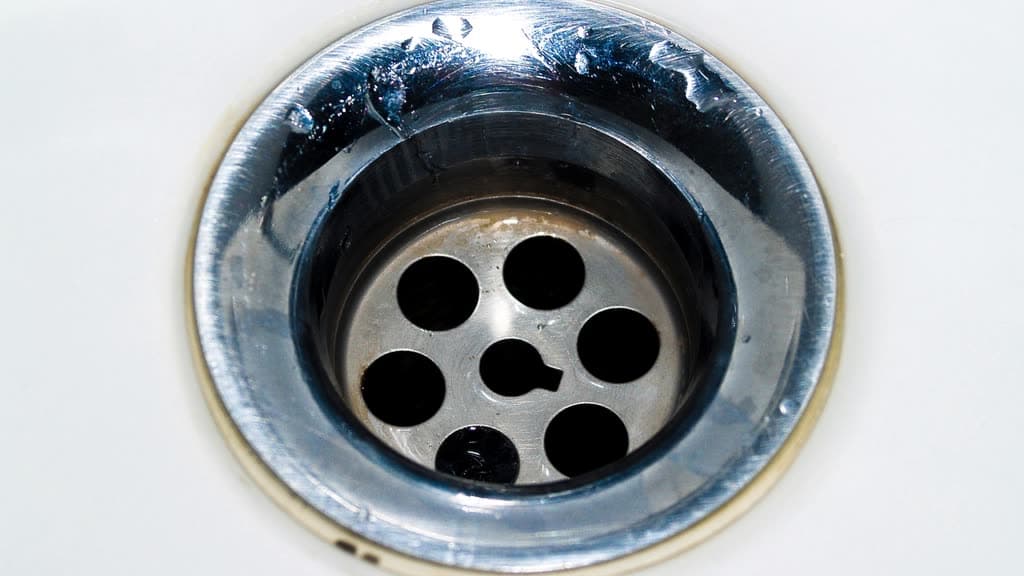
Short answer
Start with the simplest fix: pull out the stopper and clean it, then plunge with the overflow blocked. If that fails, clean the P-trap under the sink or use a small hand auger. Skip chemical drain cleaners. If more than one drain is slow, or the clog keeps returning, the problem is likely further down the line and needs a plumber.
Before you start: one drain or several?
If only one fixture is slow, keep reading. If several drains are slow, or water comes up in a tub when you flush, the blockage is further down. See drain backing up and sewer line problems.
Bathroom sink
Hair, soap and toothpaste build up on the stopper and in the trap.
- Remove the pop-up stopper. Many lift straight out. Others are held by a pivot rod under the sink; unscrew the small nut on the back of the drain pipe, pull the rod out, then lift the stopper. Clean off the gunk. This alone fixes a lot of slow sinks.
- Use a plastic drain cleaning strip (the barbed kind sold at hardware stores) to pull hair out of the drain opening.
- Plunge. Use a small cup plunger. Stuff a wet cloth into the overflow hole so pressure goes down, not out. Add enough water to cover the plunger cup, then plunge firmly 10 to 15 times.
- Clean the P-trap if it's still slow (see below).
Kitchen sink
Grease, food scraps, coffee grounds and starchy waste are the usual causes.
- If you have a disposal, check it first. Run it with cold water. If it hums but doesn't spin, it's jammed. See garbage disposal not working.
- Plunge. On a double sink, block the other drain with a wet cloth or stopper, and plug the dishwasher hose if you can, so pressure goes toward the clog.
- Clean the P-trap.
- Use a hand auger through the drain in the wall if the clog is past the trap.
Tub and shower
Hair and soap scum, almost always near the top.
- Remove the stopper or strainer. Some unscrew, some pop out, some need a screwdriver.
- Pull the hair out with a drain strip or needle-nose pliers. This clears most tub clogs.
- Plunge, blocking the overflow plate on a tub with a wet rag.
- Hand auger through the drain or the overflow opening if needed.
How to clean a P-trap
The P-trap is the U-shaped pipe under a sink.
- Put a bucket underneath and have old towels ready.
- Unscrew the two slip nuts by hand (or with pliers wrapped in a cloth). Most modern traps are plastic, so don't crank on them.
- Tip out the water and debris. Clean the trap with a brush.
- Look into the pipe going into the wall. If you can see the clog, pull it out.
- Reassemble, hand-tight plus a little more, then run water and check for drips.
What about chemical drain cleaners?
We don't recommend them, for several reasons:
- They often don't work on solid clogs like hair mats or grease, especially if water is standing.
- They can damage pipes and fixtures with repeated use.
- If they don't work, you're left with a sink full of caustic liquid, which is dangerous for you and anyone who works on it next.
- They're a hazard in homes with children and pets.
Enzyme cleaners
Enzyme or bacterial drain treatments are gentler. They're better for slow buildup and maintenance than for clearing a blocked drain.
Boiling water, baking soda and vinegar
Hot (not boiling) water can help soften grease in a kitchen drain. Baking soda and vinegar create a fizz but have limited clearing power. Be careful with boiling water: it can soften PVC joints and crack porcelain.
When to call a plumber
- More than one drain is slow or backing up
- The clog comes back within weeks of clearing it
- You've tried plunging and a hand auger without success
- You smell sewage or hear gurgling from other fixtures
- An object is stuck in the drain (a toy, a ring, a bottle cap)
- The drain pipe is old or leaking, or you can't get the trap apart without forcing it
What to tell the plumber
- Which drain, how long it's been slow, and whether other drains are affected
- What you've tried, especially any chemicals
- If an object went down the drain
A plumber can clear clogs deeper in the line with a larger drain machine or water jetting, and use a camera if clogs keep coming back. See drain cleaning.
Keep drains clear
- Hair catchers in showers and tubs, emptied regularly
- No grease down the kitchen sink. Let it cool and throw it out.
- Scrape plates into the trash, not the sink.
- Don't put coffee grounds, eggshells, rice, pasta or fibrous peels down the disposal.
- Run hot water through bathroom sinks for a few seconds after use.
- Clean stoppers every month or two.
Frequently asked questions
What's the best way to unclog a bathroom sink?
Pull out and clean the pop-up stopper first, since that's where most of the hair collects. Then plunge with the overflow hole blocked. If it's still slow, clean the P-trap under the sink.
Do chemical drain cleaners damage pipes?
Repeated use can harm older pipes and fixtures, and they often don't clear solid clogs anyway. Mechanical methods, like plunging, a drain strip or an auger, are safer and usually more effective.
Why does my drain keep clogging?
Often it's buildup deeper in the line that plunging only partially clears, or habits like grease or wipes going down drains. If a drain clogs repeatedly, a plumber can clear the full line and check it with a camera.
Can I use a plunger on a double kitchen sink?
Yes, but block the other drain with a stopper or wet cloth first, and pinch or plug the dishwasher drain hose if you can. Otherwise the pressure just pushes water up the other side.
How much does it cost to have a drain cleared?
It depends on where the clog is, how it's accessed, and whether a camera inspection is needed. Ask the plumber how they price the visit before they start.