

Short answer
Before a hard freeze, disconnect hoses, cover hose bibs, shut down and drain the irrigation system, open cabinet doors on exterior walls, and let vulnerable faucets drip. If a faucet slows to a trickle during a freeze, leave it open and warm the likely frozen section gently with a hair dryer or a space heater at a safe distance. Never use an open flame. If water sprays or drips once it thaws, shut off the main right away.
Why pipes split in a freeze
Water expands as it freezes. The pipe usually doesn't split right where the ice forms: pressure builds in the section between the ice plug and a closed faucet, and the pipe gives way at its weakest point. That's why dripping a faucet helps, and why a burst often shows up somewhere that didn't look frozen. It's also why the damage usually appears when the pipe thaws and water starts flowing again.
Which pipes are most at risk in a McKinney home
Many homes here are built on a concrete slab, where water lines run through the slab, the walls and, in many houses, the attic. The lines at risk are the ones exposed to outside air:
- Attic lines. Supply pipes running through an attic sit in space that can get nearly as cold as outside. Insulation laid over the top of a pipe helps; a pipe resting on top of the insulation is exposed.
- Pipes in exterior walls, especially kitchen and bathroom sinks on outside walls, where cabinets keep room heat away from the pipes.
- Hose bibs (outdoor faucets) and the short run of pipe just inside the wall behind them.
- Garage lines, including water heater connections and laundry lines in an unheated garage.
- Irrigation backflow preventers. The brass assembly that sticks up out of the ground is fully exposed and a very common freeze casualty.
- Pool and spa equipment lines.
Pipes down in the slab itself are surrounded by soil and concrete and are much less exposed to freezing air than the lines above.
Before a hard freeze
- Disconnect garden hoses and fit insulated covers over hose bibs. A connected hose traps water in the faucet.
- Shut down and drain the irrigation system. Close its shutoff, then drain or blow out the lines following your installer's or the manufacturer's steps, and wrap or cover the backflow preventer.
- Open cabinet doors under sinks on exterior walls so room heat reaches the pipes.
- Let faucets on exterior walls drip, both hot and cold on a single-handle faucet. Moving water is slower to freeze, and an open faucet relieves pressure if ice does form. Follow any City conservation requests during a storm.
- Keep the heat on, including at night and if you're away. Don't let the house get cold to save on heating during a freeze.
- Close garage doors if water lines run through the garage.
- Insulate exposed pipes you can reach, in the attic, garage and crawl spaces, with foam pipe sleeves. Seal drafts where pipes pass through exterior walls.
- Know where your main shutoff is and make sure it turns. See how to shut off your water. This is the most useful thing you can do before a freeze.
Signs a pipe is frozen
- A faucet gives only a trickle, or nothing, during a freeze while others work
- A toilet won't refill
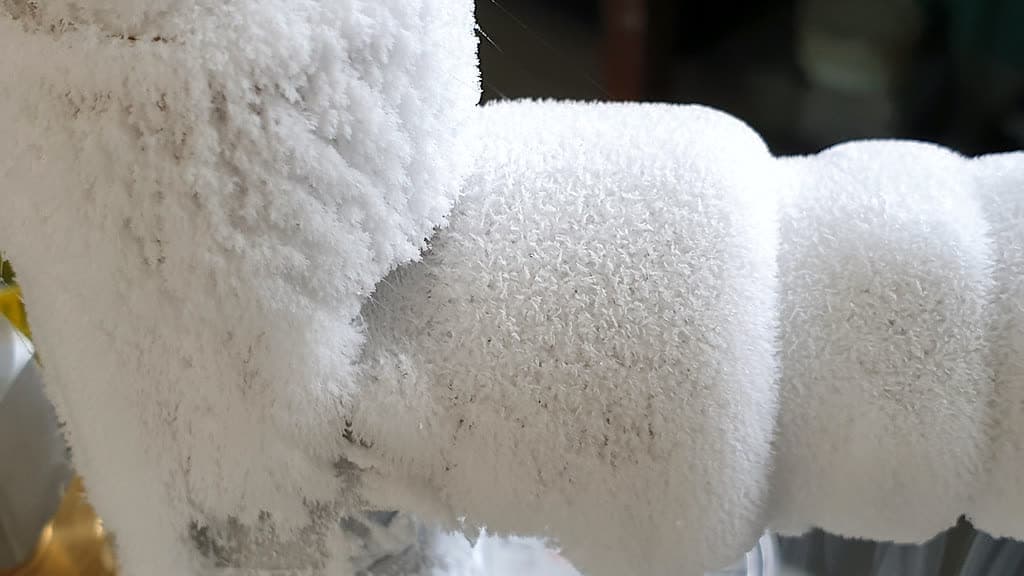
- Frost on an exposed pipe
- No water at all from the house, with neighbors unaffected (the frozen section may be where the line enters the house, or on the attic run)
If no water comes out anywhere and neighbors are also out, the problem may be on the supply side. Check the City's channels, and report suspected City-side problems to the City's Water/Wastewater line on 972-547-7360.
How to thaw a frozen pipe safely
- Open the faucet the frozen pipe feeds, hot and cold. As ice melts, water flowing through helps thaw the rest, and the open faucet relieves pressure.
- Find the frozen section. Start with exposed pipe near the faucet and work back toward exterior walls, the attic or the garage.
- Apply gentle heat. A hair dryer, a heating pad, towels soaked in hot water, or a space heater set at a safe distance all work. Start at the faucet end and move back toward the frozen section so melting water has somewhere to go.
- Keep going until full pressure returns, then check every faucet in the house for others that are frozen.
- Watch closely for leaks as it thaws. A split often doesn't show until water flows again.
When a frozen pipe has burst
Signs: water spraying or dripping once the pipe thaws, a wet ceiling or wall, water pooling near a hose bib or the backflow preventer, the sound of running water with every tap off, or the water meter moving with everything turned off.
- Shut off the main immediately.
- Turn off the water heater if hot water lines are affected: power off for electric, the gas control to "pilot" or "off" for gas.
- Turn off electricity to wet areas if you can do it without standing in water.
- Photograph the damage for insurance.
The full sequence is in our burst pipe guide, and burst pipe repair explains what the repair involves. If water is actively flooding and you can't stop it, see emergency plumbing.
What not to do
- Don't use an open flame on any pipe, ever.
- Don't hammer or bang on a frozen pipe. Ice-filled pipes crack easily.
- Don't leave the house while trying to thaw a pipe with a heater running.
- Don't turn the water back on at full blast after a repair. Open the main slowly and check for leaks.
- Don't assume one thawed pipe means you're done. After a hard freeze, a second break somewhere else is common.
DIY vs calling a licensed plumber
You can safely thaw an exposed pipe you can reach, and do all the prevention steps above. Call a licensed plumber when:
- The frozen section is inside a wall, ceiling or attic you can't reach safely
- A pipe has split or is leaking
- You have no water at all and can't find the frozen spot
- The irrigation backflow preventer has cracked (it usually needs replacing and testing)
After a big freeze, plumbers get very busy, so preparation beforehand is worth far more than a fast repair afterward. See choosing a plumber for how to check a license, especially when out-of-area contractors show up after a storm.
What to tell the plumber
- Which fixtures have no water or low flow
- Where you think the frozen or split section is (attic, exterior wall, garage, outside)
- Whether you've shut off the main
- Whether there's visible water damage
Prevention for next winter
- Insulate attic and garage pipes before the cold season.
- Keep hose bib covers and pipe sleeves where you can find them in a hurry.
- Label the main shutoff and the irrigation shutoff.
- Ask a plumber whether any lines should be rerouted or better insulated if the same pipe freezes every time.
Frequently asked questions
At what temperature do pipes freeze in Texas?
There's no single number. It depends on how long the cold lasts, wind, and how exposed the pipe is. An attic or hose bib line is far more at risk than an interior pipe. When a hard freeze is forecast, do the prevention steps rather than waiting to see.
Should I drip my faucets during a freeze?
Dripping faucets on exterior walls helps: moving water is slower to freeze, and an open faucet relieves the pressure that actually splits pipes. Follow any City conservation requests during a storm.
How do I thaw a frozen pipe without damaging it?
Open the faucet, then warm the pipe gently with a hair dryer, heating pad, hot towels or a space heater at a safe distance, working from the faucet back toward the frozen section. Never use an open flame or a fuel-burning heater.
How do I know if a frozen pipe has burst?
Look for water spraying or dripping as it thaws, wet ceilings or walls, pooling outside near a hose bib or backflow preventer, or the water meter moving with every tap off. Shut off the main right away if you see any of these.
Does my irrigation rain/freeze sensor protect my pipes?
No. McKinney requires a working rain/freeze sensor, but it only stops the system running. The backflow preventer and lines still need to be shut off, drained and covered before a hard freeze.